Kirsty Barros x The Social Outfit
For International Women’s Day, I’m sharing a conversation with designer Kirsty Barros, founder of Post Hunk, on her recent collaboration with The Social Outfit ~ a Sydney social enterprise creating employment and training pathways for refugee and migrant women in fashion.
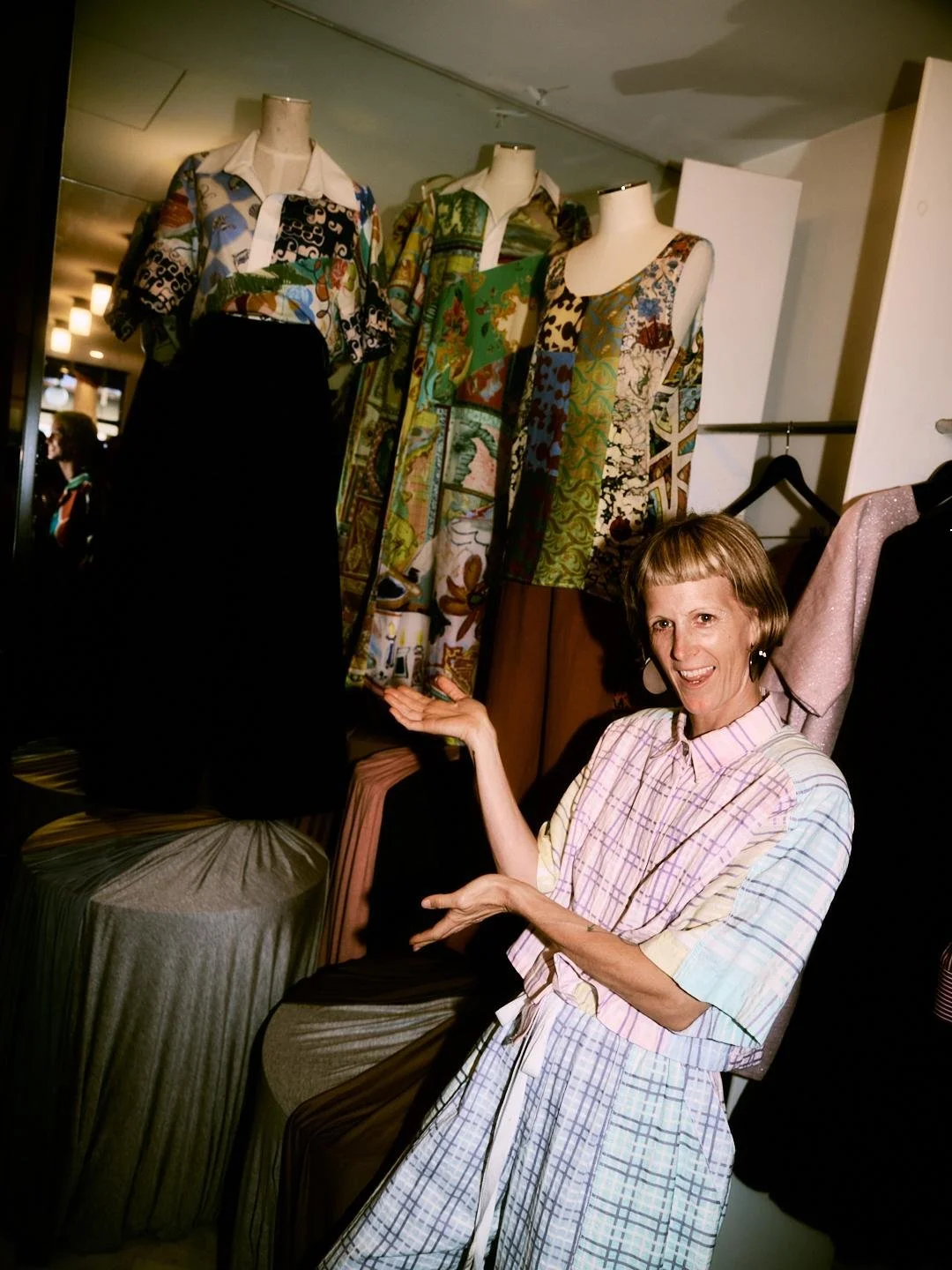
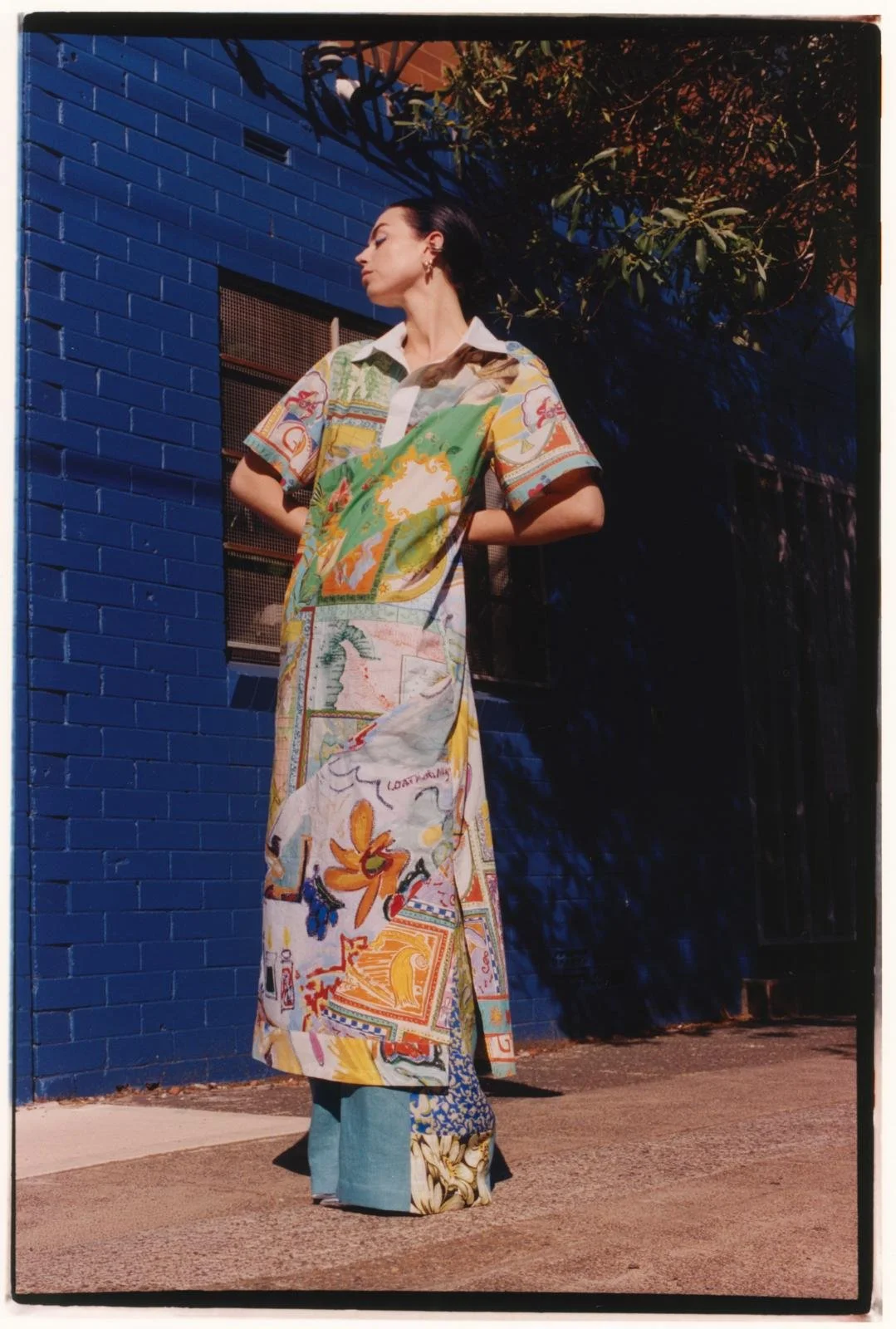
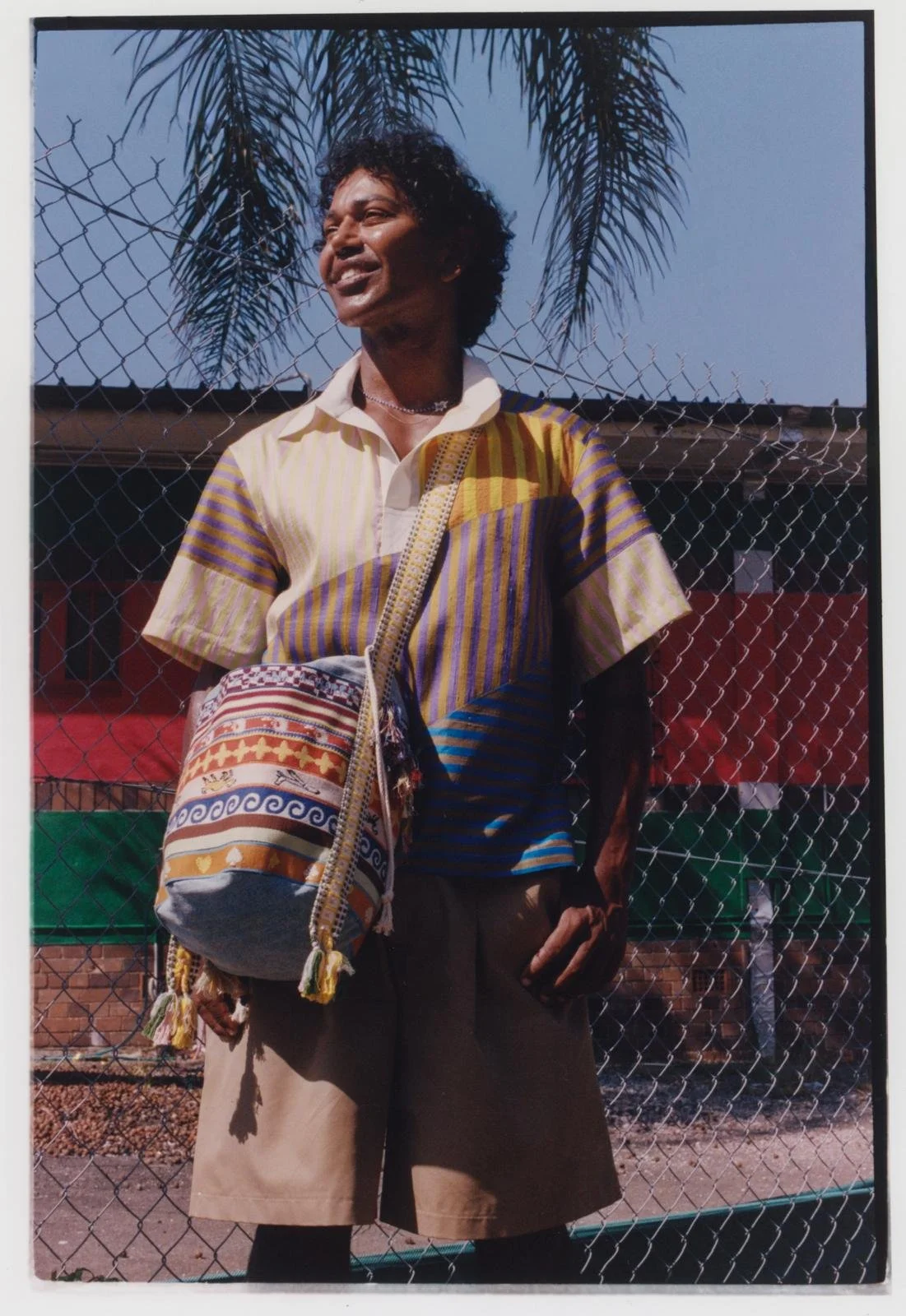
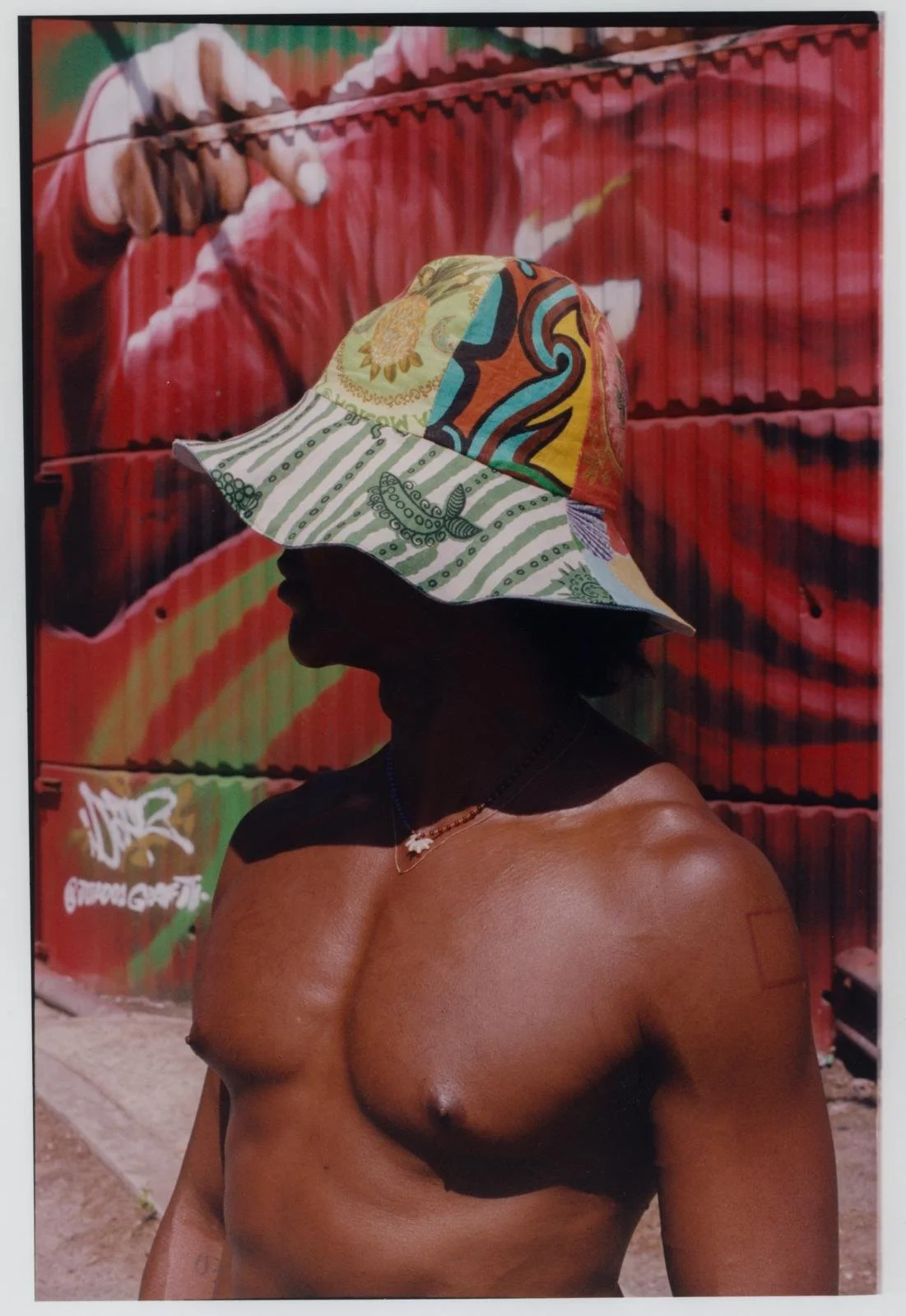
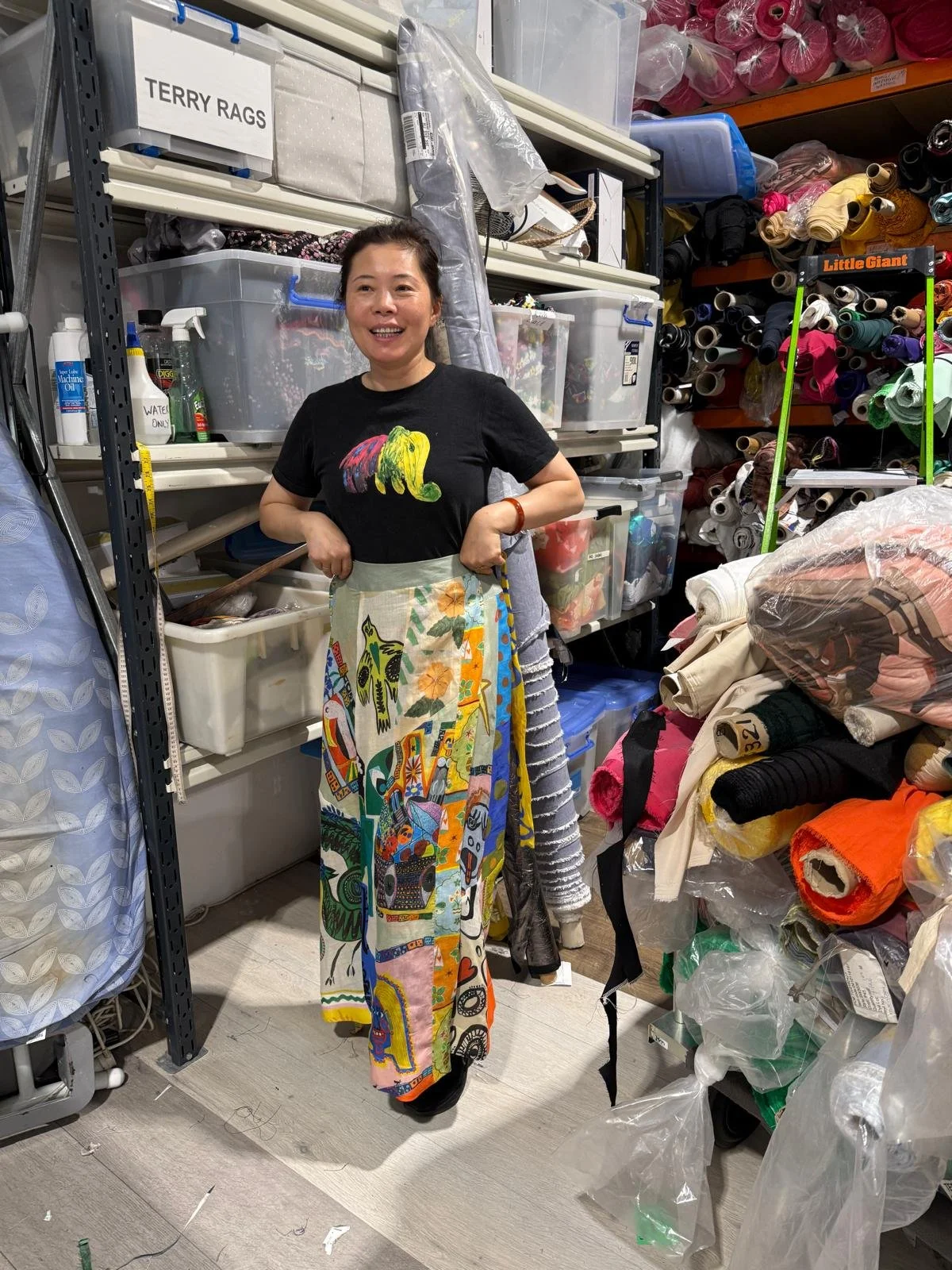
Kirsty’s latest project, TESSELLATE, brings together donated fabric remnants from brands like Alemais and the skilled hands of the women working in The Social Outfit’s Marrickville studio to create one-of-a-kind garments. In our conversation for Mother Tongue Journal, Kirsty reflects on collaboration, circular design, working with limitation and the quiet power of making clothes collectively.
How did the collaboration with The Social Outfit first come about?
The collaboration began quite organically. I had met Amy Low, CEO of The Social Outfit, years ago when she was one of Post Hunk’s first customers. Over time she shared more about the work happening inside their workroom and the community they had built there.
When the invitation came to design for the Tessellate program it felt like a natural alignment. Post Hunk has always worked with reclaimed materials ~ vintage textiles, deadstock, fragments that already carry a history. The Social Outfit approaches fashion with the same respect for material, but with a deeply human focus: training and employing refugee and migrant women through their studio. The project brought together two things that feel essential to me ~ circular design and community.
What did designing within The Social Outfit’s studio allow you to explore?
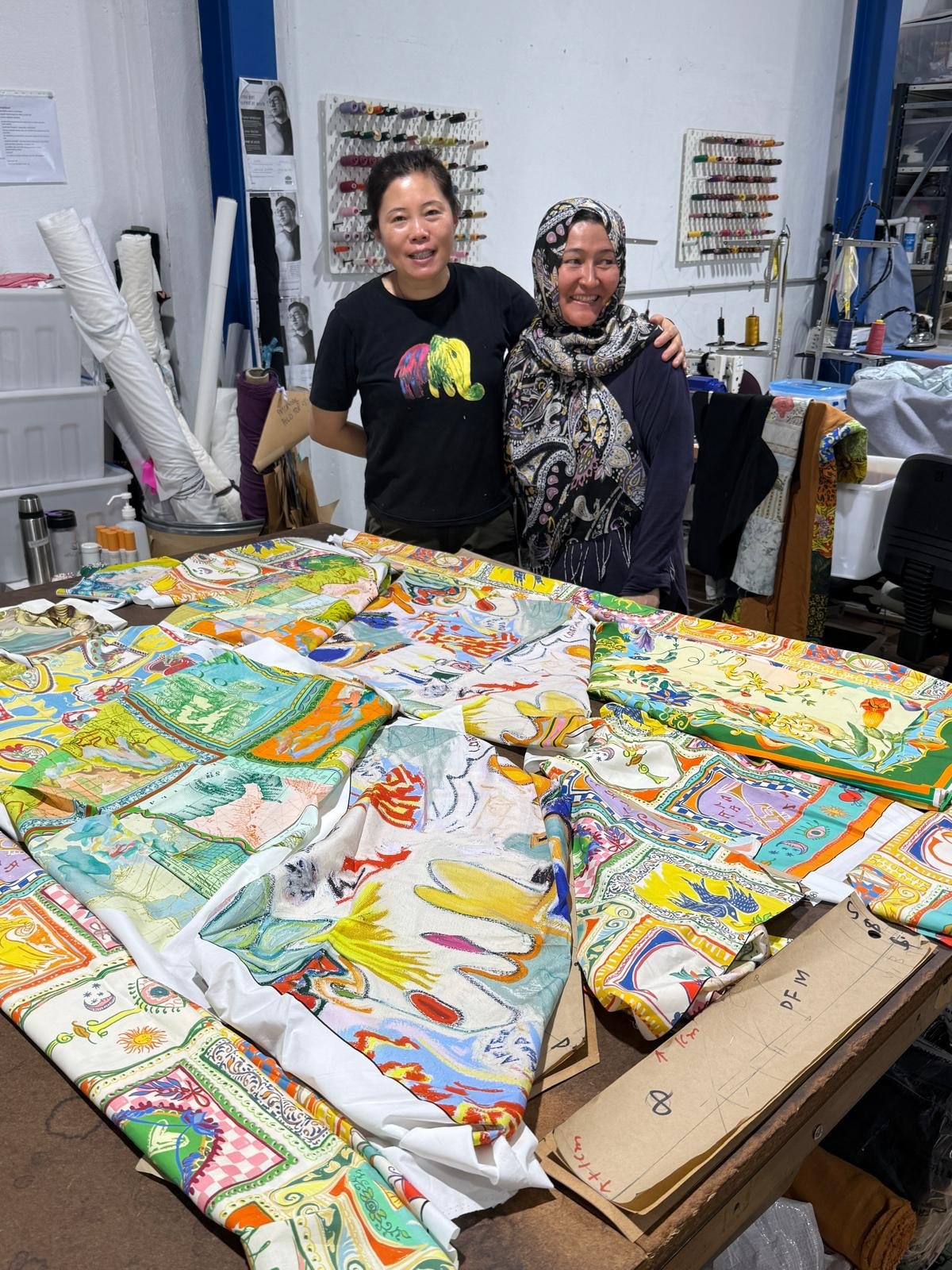
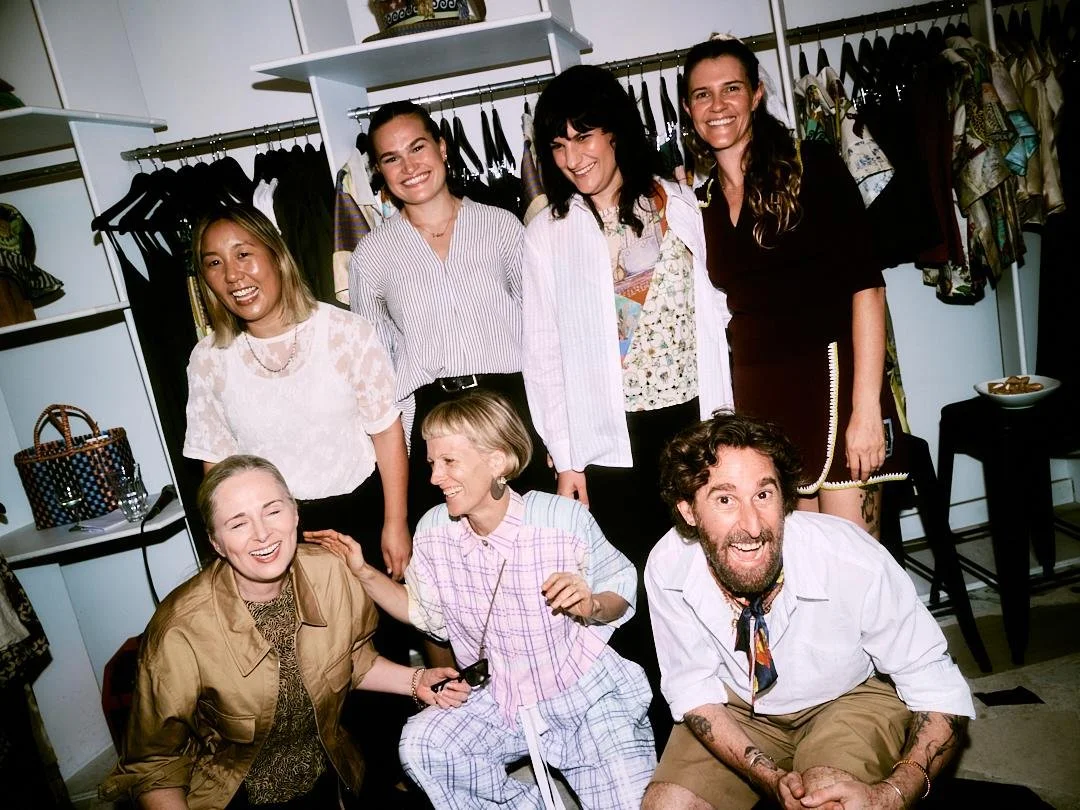
Styling and art direction often shape a moment ~ creating an image or atmosphere that exists very immediately. Working inside a studio like The Social Outfit slowed the process down and made it collective. Decisions were shaped by the materials on hand, the pattern makers, the cutters and the machinists. It reminded me that garments aren’t just ideas. They’re relationships between people, skills and time.
This project involved many hands. What did collaboration look like in practice?
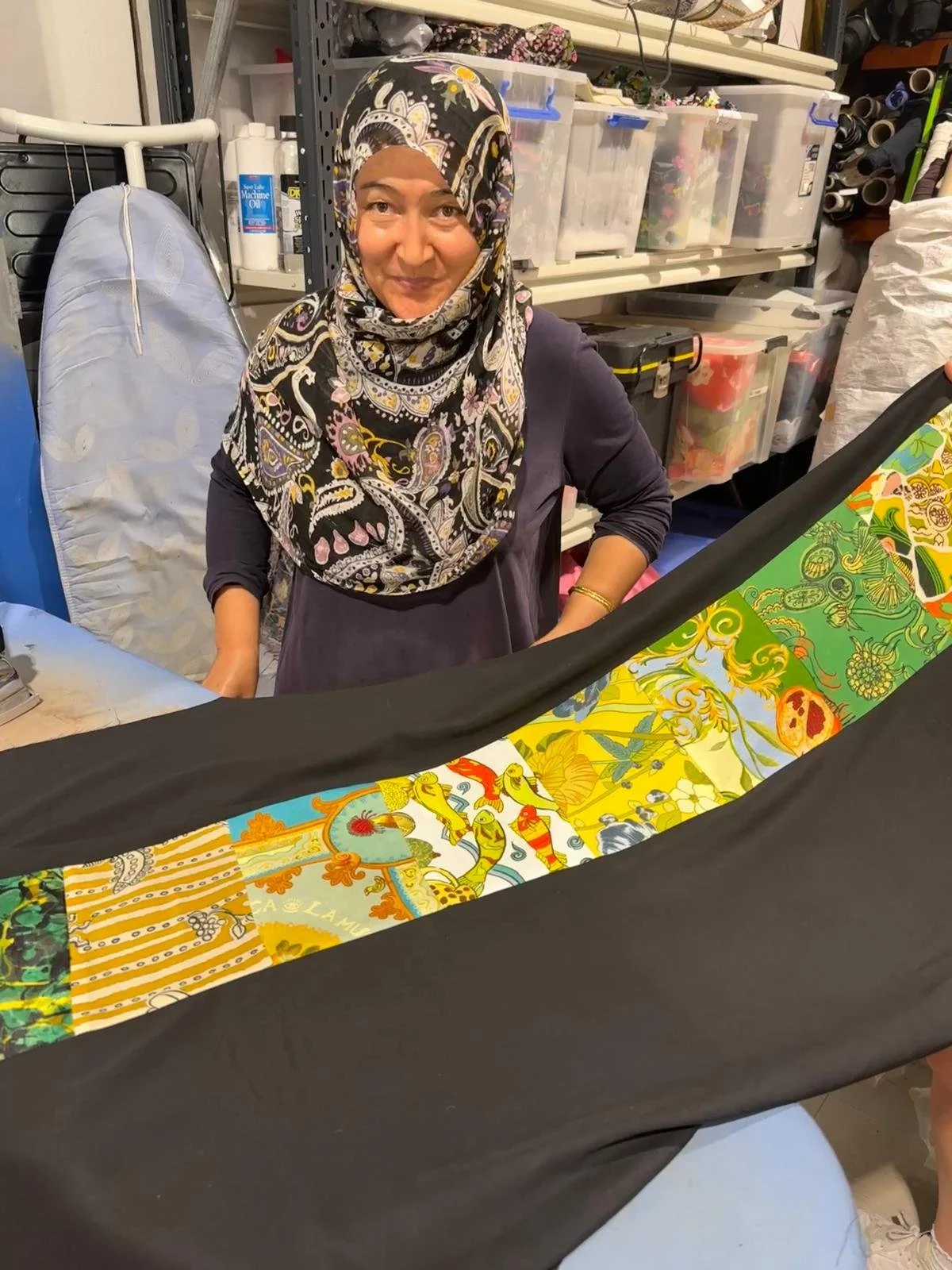
Collaboration wasn’t an abstract idea ~ it was simply how the work happened. Each garment moved through many people: someone cutting, someone sewing, someone adjusting the pattern, someone deciding how two fabrics should meet. Every person left a trace in the final piece. That process makes the clothes feel alive in a way that traditional fashion production often erases.
The collection works with donated fabrics and remnants. What does designing with existing materials open up creatively?
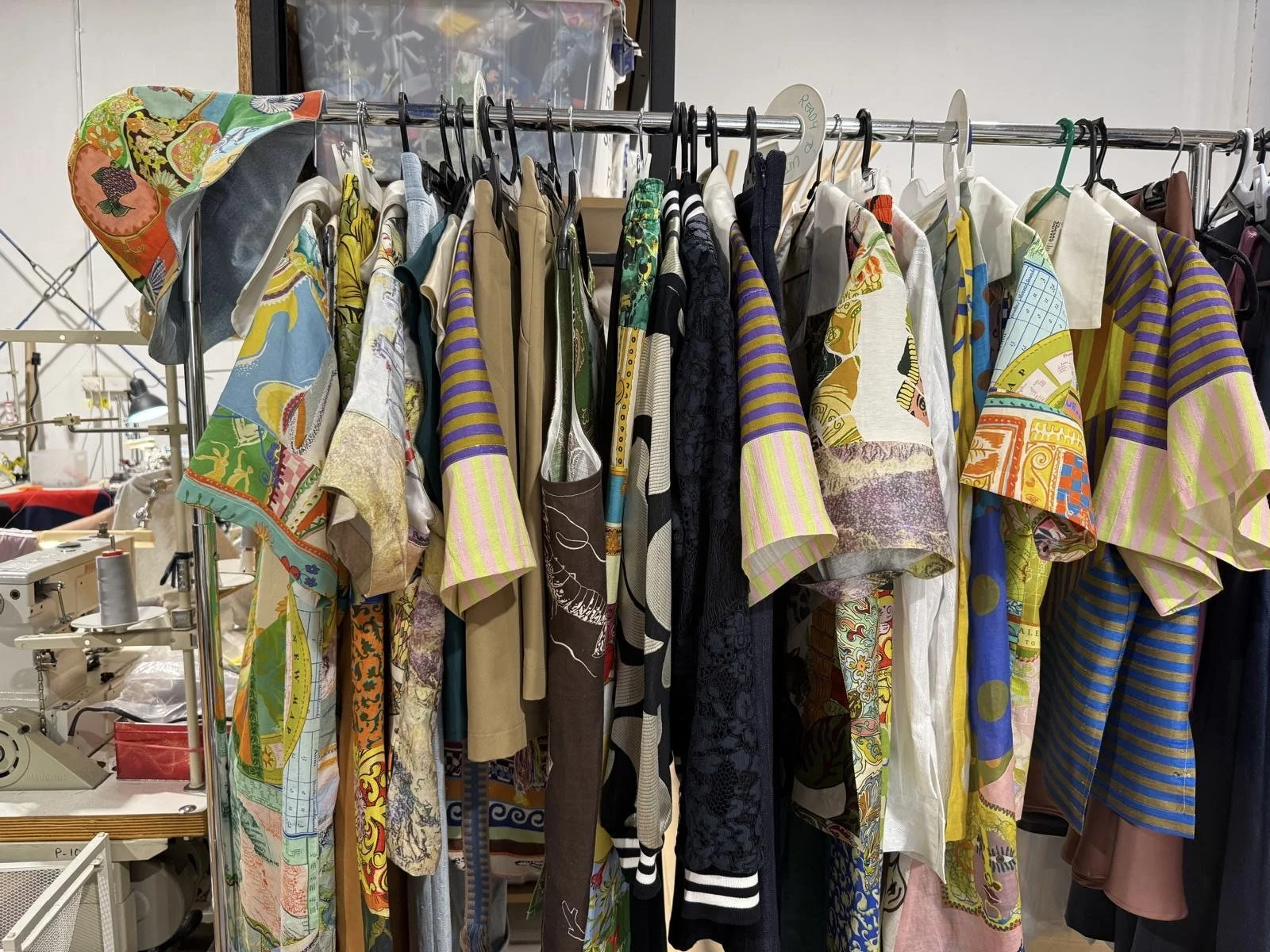
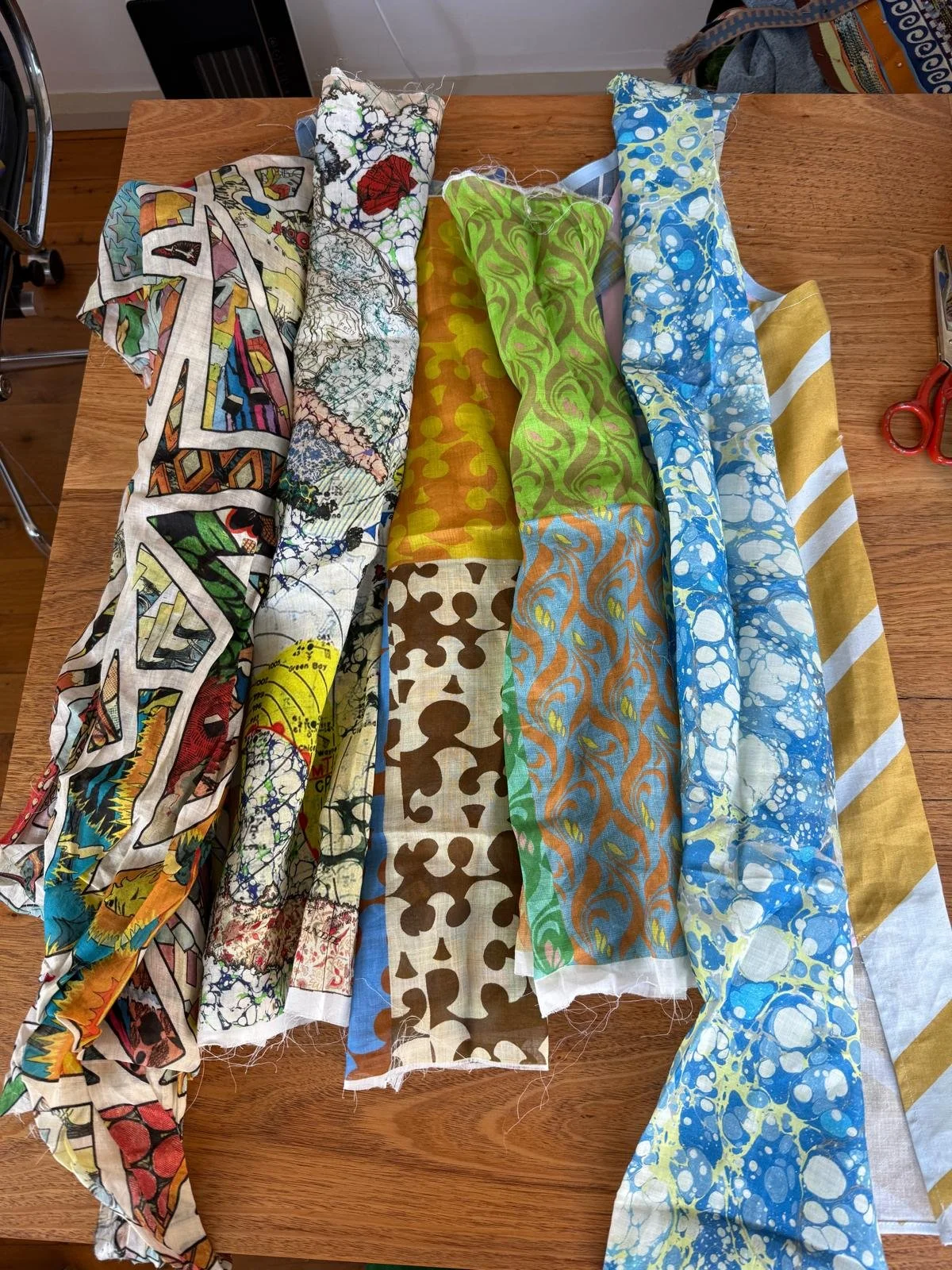
Working with existing materials changes the relationship between designer and fabric. Instead of imposing an idea onto a blank surface, you begin by listening to what’s already there ~ the scale of a print, the size of a remnant, how different fabrics sit together.
The designs were created to adapt to the remnants available. Seams could be added or removed depending on the materials on hand. It becomes a conversation rather than a command.
What resonates deeply in Kirsty’s collaboration with The Social Outfit is the spirit of repair, reuse and collective making ~ values that sit at the heart of our A4DInterwoven journeys. In Ghana we spend time with the YEVU Foundation, a social impact manufacturing studio creating employment and training pathways through ethical production. We also visit and collaborate with Revival Earth, whose work centres repair and the reimagining of existing textiles.
In Dakar, designers such as Eniola Dawodu are also exploring how discarded materials can be transformed into new garments with meaning and presence. Repair, upcycling and collaboration are not simply ideas for us ~ they form a living foundation for the way we travel, learn and create through A4DInterwoven.
Can you speak about the making process?
The process began by sorting through donated remnants. The Social Outfit has an abundance of treasure tubs filled with textile pieces ~ many donated by Australian brands such as Alemais. From there the design became a kind of puzzle. We looked at the scale of each fabric piece and asked what shapes could come from it, and how multiple remnants could meet within one garment.
The workroom team played a huge role in refining those ideas through patternmaking and construction. Patchwork requires precision but also intuition ~ the structure comes from the patternmaking, while the arrangement of fabrics often happens instinctively.
The Social Outfit centres employment and training for refugee and migrant women. How did that shape the project?
It grounded the work in something larger than aesthetics. The garments are beautiful, but they’re also part of a system that creates paid work, training and confidence for women building new lives in Australia. When designers enter spaces like this, the responsibility is to listen. The goal isn’t to impose an idea, but to contribute thoughtfully within an existing ecosystem of skills and knowledge.
What does tessellation mean to you beyond the garment?
Tessellation is a beautiful metaphor for community. Different shapes, histories and skills fitting together to create something whole. That’s exactly what the workroom felt like. Every garment carries traces of where it came from ~ the materials, the people who made it, the cultural references woven into it. This collection holds many stories layered together.
What did this collaboration leave with you?
A renewed belief that fashion can be both beautiful and purposeful. The experience reminded me that the most meaningful work often happens collectively ~ when different skills and perspectives come together around a shared intention.
What are you exploring next?
I’m continuing to explore how fashion can sit between design, storytelling and social impact, expanding Post Hunk into spaces that prioritise circularity, craft and community. I’m also pushing myself into new territory ~ stepping into the digital world with a global website and sharing the work more openly.
Thinking less. Acting more. Experimenting.